
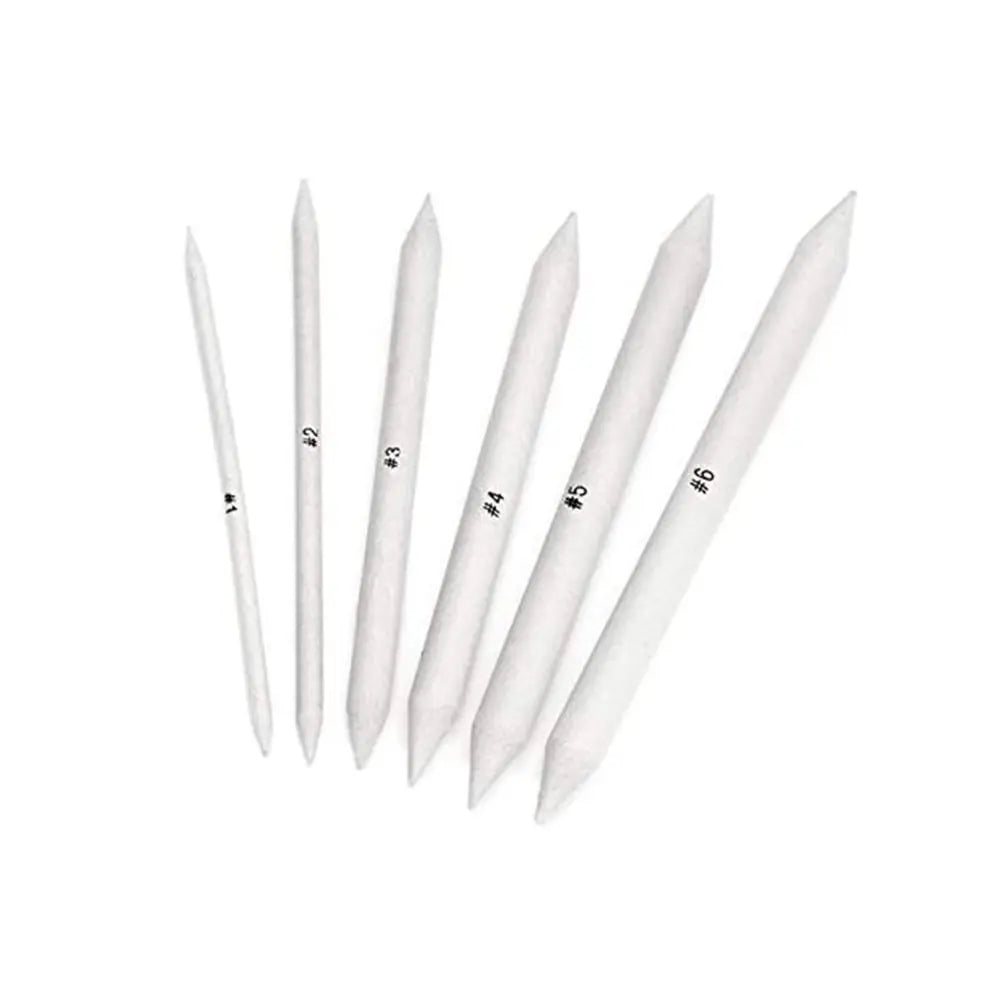
Most artists start with pencils, charcoal, and a sketchbook—but sooner or later, they realise something is missing. Getting smooth shading and realistic depth isn’t always easy by hand alone. That’s where Paper Stumps was invented. They may look simple, but they can completely transform the way your drawings feel and look.
What Are Paper Stumps?
A tightly rolled tool made from soft paper, Paper Stumps, are also known as paper blending stumps or blending stumps. They come in various sizes, with pointed ends that allow artists to blend, soften, and smooth graphite, charcoal, or pastel marks with precision. Unlike fingers or tissues, Paper Stumps give you control, cleanliness, and consistency—three things every artist values.
The Power of Controlled Blending
It is one of the most important techniques in drawing, especially when working with pencils or charcoal. Blending paper stumps allows artists to achieve smooth tonal transitions without smudging or overworking the surface. Using your fingers might seem convenient, but it often transfers oils onto the paper, which can affect how the medium adheres later.
Paper Stumps eliminate this issue while providing you with far greater accuracy.
Artists are often able to create softer transitions between strokes and lines using blending stumps rather than using fingers, paper towels, etc., to create softer areas of color. Blending stumps also allows for the representation of depth (making the image appear to recede into space) while adding character to the work. Blending with a blending stump allows for a higher degree of control and accuracy than blending with improvised tools.
Precision for Fine Details
Paper stumps are helpful when it comes to blending in close quarters, such as near the eyes, around the face, in hair strands, and in fabric folds, so one of their most positive attributes is exactly that. When an artist creates portraits, the ability to use paper blending stumps will make it easy to achieve natural skin tones and softer highlights than would otherwise be possible.
Because Paper Stumps come in multiple sizes, artists can choose the right stump for each task—larger ones for broad shading and smaller ones for intricate detailing. This versatility makes them suitable for everything from quick sketches to highly detailed realism.
More Professional Results
Artists often underestimate how much cleanliness affects the final outcome of their work. Using fingers to blend can quickly lead to dirty highlights and unintended smears. Paper blending stumps keep your work neat, especially when layering tones gradually.
Additionally, Paper Stumps help prevent over-blending. Unlike fingers, they don’t exert the same level of force on the surface being painted, allowing the artist to create contrast and texture while maintaining the ability to make smooth transitions. This balance is essential for creating professional-quality artwork.
Easy to Maintain and Reuse
Larger Paper Stumps are good for shading large areas, whereas smaller Paper Stumps work best on small details such as facial features, hair texture, etc. The tips can be cleaned off so that they are usable again. Artists will either gently sand their stumps or wipe them off with scrap paper to get rid of any excess pigment.
Keeping multiple stumps dedicated to different mediums or tones is also a smart practice, helping maintain colour clarity and preventing unwanted mixing.
A Small Tool with Big Impact
Despite their simplicity when viewed from afar, paper stumps are essential to producing a high-quality drawing. When used as part of an artist's toolbox, a paper stump will allow an artist to create depth, feelings, and realism in their artwork and move from creating an initial sketch to creating an actual piece of art.
When it comes time to add shading to your artwork—whether it's subtle or dramatic—blending paper stumps offers many opportunities for you to emulate your artistic vision.
Final Thoughts
Tools used by artists should assist with precision, creativity, and uniformity; therefore, Paper Stumps meet these requirements by providing precision with versatility and professional results at an affordable price while being a simple-to-use tool for any artist's toolkit. Whether you’re sketching casually or working on detailed commissions, paper blending stumps are a small investment that delivers a big return in quality.
For those who are trying to find dependable, artist-quality Paper Stumps to enhance their creation, check out the selection on Canvazo and see how they make carefully designed tools for artists of all skill levels to help enhance their creative process.
Frequently Asked Questions (FAQs)
What are Paper Stumps used for?
Paper Stumps are used to blend and smooth graphite, charcoal, pastel, and colored pencil marks. They help create soft gradients, realistic shadows, and seamless transitions without smudging or damaging the paper.
Are Paper Stumps better than using fingers for blending?
Definitely! Applying fingers on to paper transfers natural oils to it, and this can affect how well any shading and each subsequent layer will adhere properly to each other. Using a dry paper blending stump to blend will produce a more consistent finish and preserve the integrity of the artwork through to completion, kudos to the stumps!
Can beginners use a blending stump for drawing?
Absolutely. A blending stump for drawing is beginner-friendly and makes learning shading and tonal transitions much easier.
Do Paper Stumps work with colored pencils?
Yes, paper blending stumps work well with colored pencils. They help soften color transitions and blend layers smoothly without muddying the colors, especially when used gently.
How do you clean Paper Stumps?
Cleaning paper stumps can be accomplished by using either fine-grained sandpaper or by rubbing the stump against a piece of scrap paper; this process removes excess paint buildup and makes the stump usable many times.
What sizes of Paper Stumps should artists have?
It’s ideal to have multiple sizes. Large paper stumps are great for broad shading areas, while smaller ones are perfect for fine details like facial features, hair, and textures.